
Sand Drop
Fingers YodaPuzzle
3.829.00 Reviews
- Version
- 0.4.1
- Installs
- 10.00K
- Age Rating
- Everyone
Screenshots
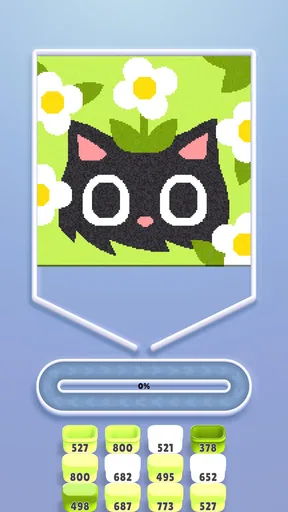
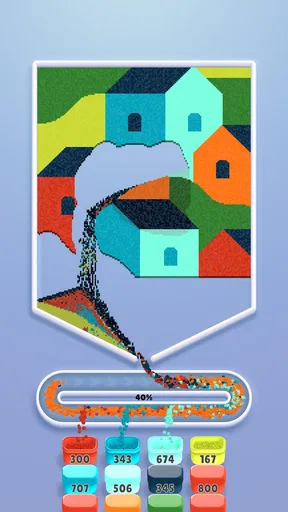
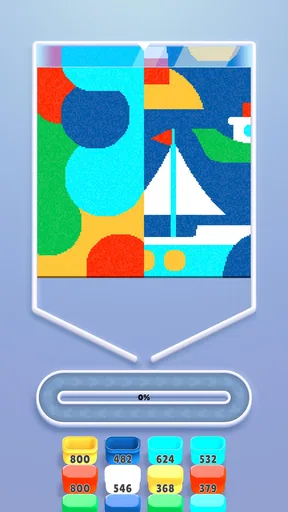
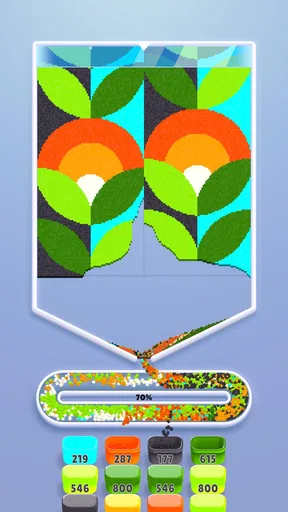
Our Review of Sand Drop
 Analysis by Appyee
Sand Drop is the kind of puzzle game I reach for when I want something quiet, visual, and easy to understand without committing to a long session. Its basic appeal is immediate: colored sand, simple swiping, and puzzles that invite you to think about movement rather than memorize complicated rules. I found that combination more relaxing than many faster mobile puzzles, although it also means the game will not satisfy everyone looking for deep strategy or constant challenge.
Developed by Fingers Yoda, this free game sits in the puzzle category and is suitable for Everyone. It has reached over 10 thousand installs and holds a 3.8 average from around 80 ratings, with roughly 28 written reviews. Those figures suggest a small but real audience rather than a huge mainstream hit, so I approached it as a focused casual game instead of expecting the breadth of a major puzzle franchise. That is the right mindset for enjoying it.
How Sand Drop feels in everyday play
The first thing I noticed is how quickly the game communicates its central idea. Swiping feels more natural than tapping through menus or learning a large collection of symbols. The colorful sand gives the board a pleasant visual identity, and the relaxed presentation makes it suitable for short breaks. I can imagine playing it while waiting for an appointment, winding down before bed, or taking a few minutes away from work without needing to rebuild my concentration from scratch.
That simplicity is also the main design trade-off. Sand Drop is not the right choice if you want a puzzle game built around a long story, competitive rankings, or a large set of demanding mechanics. Its attraction comes from the small satisfaction of guiding the puzzle toward a solution. Players who enjoy calm spatial thinking will probably understand the appeal quickly; players who need dramatic progression may find the experience modest.
What the swiping style demands from you
Although the controls are approachable, a swipe is not merely a button press. I found myself paying attention to how a movement changes the whole arrangement rather than focusing on one piece at a time. That makes the game more interesting than its short summary might suggest. A useful habit is to pause before every move and identify where the sand needs to end up, instead of reacting to the most obvious open space.
This approach also helps prevent unnecessary restarts. When a board begins to look crowded, I try to think in terms of the next two or three consequences: which color will move first, what space will be blocked, and whether a seemingly helpful swipe will make the final arrangement harder. That planning rhythm is one of the more rewarding parts of the experience, and it gives the game a little more depth without making it feel like a traditional hard-core logic title.
For a realistic everyday scenario, I would use it during a short commute when I want interaction but not noise. I can play a little, put the phone away, and return later without needing to remember a complicated narrative. It also works well as a screen-time alternative for someone who wants a game that keeps the hands occupied while the mind stays relatively calm.
Speed expectations and the value of short sessions
Sand Drop presents itself as a lightweight casual puzzle, so I would not approach it expecting the rapid-fire pace of an arcade game. The appeal is in the time spent considering a swipe and watching the colorful arrangement respond. In my experience, that slower rhythm feels intentional rather than frustrating when I am in the mood to solve something gently.
The game is especially well suited to players who dislike countdown pressure. Instead of measuring success by how quickly I can react, it encourages me to look at the board and make a deliberate choice. That makes it a better fit for a quiet break than for a competitive session where every second matters.
There is a practical benefit to this design. If I only have a few minutes, I can still make meaningful progress without feeling that I have interrupted a larger activity. On the other hand, anyone who expects a constant stream of new visual effects or increasingly frantic action may interpret the same calm pacing as slow. The best way to judge it is to decide whether you want a thinking break or an adrenaline break.
Handling heavier moments during play
A puzzle game can feel demanding even when its controls are simple, particularly when several colored areas need to be considered at once. The heavier moments in Sand Drop come from visual planning rather than from complicated controls. When the board becomes more involved, I find it useful to stop swiping for a moment and trace the intended route with my eyes first.
That small workflow makes a difference. I look for the move that creates room, not necessarily the move that appears closest to a solution. Clearing space early can make later choices easier, while moving a color into a convenient-looking position can sometimes reduce the options available afterward. This is a concrete reason to avoid playing entirely on autopilot.
Another useful tactic is to treat failed attempts as information instead of immediately repeating the same sequence. If a swipe causes a blockage, I ask which earlier decision created that problem. The game becomes more satisfying when I use that mistake to change the order of my next moves. This is where Sand Drop offers more than a purely decorative casual distraction.
Extended sessions may feel different from short ones. After several puzzles, the calm visual style can become repetitive for players who need constant novelty. I prefer using it in small portions, because the relaxed presentation remains pleasant when I give it room rather than turning it into an all-evening activity. The game is at its strongest as a compact routine, not necessarily as my only puzzle game.
Stability, recovery, and the practical experience
The current version is 0.4.1, which gives the game a relatively early-stage feel in my overall assessment. I would keep expectations realistic: a smaller puzzle title can be enjoyable without having the polish, breadth, or long-term refinement of a much larger release. What matters most here is whether the central swipe-and-solve loop remains comfortable enough to return to.
When I play a casual puzzle, I care about how easily I can resume after an interruption. A phone call, a notification, or simply locking the screen should not turn a short break into a chore. Sand Drop’s simple structure is helpful in that respect because there is not a complicated control scheme to reconstruct. I can usually return by looking at the board and reconsidering the next move.
I would still recommend closing and reopening any mobile game if it ever behaves unusually after being left in the background, especially on an older device with many apps competing for memory. That is not a special feature of Sand Drop; it is simply sensible mobile practice. The important point is that the game’s uncomplicated nature makes recovery less mentally demanding than returning to a complex action game.
Its rating of 3.8 indicates a mixed but generally workable reception. I would not treat that number as a guarantee of flawless performance, nor as a reason to dismiss the game. For me, it is a signal to keep the expectations measured: try it because the puzzle concept appeals to you, and judge the experience on the device you actually use.
Device constraints and who should install it
Sand Drop supports Android 7.0 and later, so compatibility is broad enough for many older Android phones and tablets. That makes it more approachable than games that require a recent operating system. Still, operating-system compatibility does not automatically mean identical comfort on every device. Screen size, touch responsiveness, and the age of the hardware can all affect how pleasant a swipe-based puzzle feels.
On a smaller screen, I would pay close attention to whether the colored areas are easy to distinguish and whether my finger covers too much of the board. A tablet could make the visual arrangement easier to inspect, while a compact phone may be better for quick sessions. Neither is universally superior; the right choice depends on whether you value portability or a clearer view of the puzzle.
Resource demands are difficult to judge from the listing alone, so I would not promise that every phone will behave identically. The game’s casual presentation suggests a less demanding use case than a large three-dimensional action title, but that should not be confused with a formal performance guarantee. If your phone is older, leave some storage and memory available, keep the system updated, and test the game during the kind of session you actually expect to play.
There is also a cost consideration. The game is free to download, but optional in-app purchases range from $0.99 to $99.99 per item. That is a wide span, so I would check each purchase carefully before confirming it. My recommendation is to begin with the free experience and decide whether the core puzzles are enjoyable before spending anything. A casual game should not pressure you into paying simply because you are curious about it.
The Everyone age rating makes it a reasonable candidate for a family device, but I would still explain purchases to younger players. The age label describes suitability, while purchase controls are a separate practical concern. On a shared phone or tablet, I would use the device’s purchase protections so an accidental tap does not become an unexpected charge.
Where it beats familiar puzzle alternatives
Compared with match-three games, Sand Drop feels less focused on rapid pattern recognition and more focused on arranging movement. That makes it a better option when I want to slow down and reason through a board. Match-three games are often more immediately rewarding for players who enjoy cascades, bright effects, and quick rounds, so I would choose one of those instead when I want a more energetic session.
Compared with classic number puzzles, the colored sand gives this game a more physical and visual character. I do not approach the board as a grid of abstract values; I think about flow, space, and the order of actions. Someone who loves Sudoku-style deduction may find the sand theme refreshing, but may also miss the precise mathematical structure of a number puzzle.
It also differs from physics-heavy puzzle games that rely on elaborate experiments. Sand Drop is easier to pick up because the interaction is centered on swiping rather than building a complicated chain of tools. The trade-off is that players seeking open-ended experimentation may find it more limited. I see it as a middle ground: more thoughtful than a purely passive time-killer, but less expansive than a puzzle sandbox.
That comparison helped me understand its best audience. I would recommend it to someone who says, “I want a puzzle, but I do not want stress.” I would be more cautious recommending it to a player who asks for endless variety, competitive pressure, or a strong narrative reason to keep returning. Those are not weaknesses in every context, but they are genuine reasons to choose another type of game.
Small habits that improve the experience
My first tip is to use a deliberate swipe routine. Before touching the screen, identify the area that needs to become available and decide whether the move helps that goal. This prevents the common mistake of making a locally attractive move that creates a larger problem elsewhere.
My second tip is to play with a clean visual focus. Notifications and multitasking can make a calm puzzle feel more confusing than it really is. When I give the board my full attention for a minute, I notice relationships between colors and spaces that are easy to miss while switching between apps.
My third tip is to use short sessions as a way to preserve patience. If I am repeating the same failed sequence, I stop rather than forcing it. Returning later often makes the arrangement easier to read, and the game’s casual format supports that pause. This is particularly useful for people who want relaxation instead of turning every puzzle into a test of endurance.
Finally, I would avoid judging the game after only one rushed attempt. Its appeal is subtle: the pleasure comes from seeing a messy arrangement become manageable through a few sensible decisions. If that kind of gradual satisfaction sounds good, it deserves a fair trial. If you need immediate spectacle, the game may feel too restrained from the start.
My performance verdict
Sand Drop works best as a calm, low-commitment puzzle companion. I like its clear swipe-centered idea, colorful presentation, and suitability for short breaks. The Android 7.0 minimum makes it accessible to a broad range of devices, while the free entry point makes trying it straightforward. Fingers Yoda has chosen a focused concept rather than an overloaded one, and that focus is the reason the game can feel pleasant.
My reservations are equally clear. The early version number, modest audience, mixed 3.8 average, and broad in-app purchase range mean I would not approach it as a fully established premium puzzle experience. Players who want a deep campaign, intense competition, or a constant supply of major new mechanics should look elsewhere. Even players who enjoy it may prefer to rotate it with a more demanding puzzle game to avoid visual and mechanical repetition.
For me, the deciding question is simple: do you enjoy taking a moment to inspect a colorful board and make one thoughtful swipe at a time? If yes, the free download is worth exploring, especially for quiet commutes, waiting rooms, and short evening breaks. If your ideal mobile game is fast, social, or heavily story-driven, Sand Drop is probably not the right match. I would recommend it selectively, as a gentle puzzle rather than a universal must-have.
Verdict
Strengths of Sand Drop
- Simple drag-and-drop controls are easy to learn.
- Relaxing gameplay suits short breaks and casual sessions.
- Minimalist visuals keep the board easy to read.
- Increasing challenges provide a gradual sense of progression.
- Works well for players who prefer offline-friendly puzzle games.
Limitations of Sand Drop
- Gameplay may feel repetitive after extended sessions.
- Limited variety can reduce long-term replay value.
- Precision drops may feel frustrating on smaller screens.
- Progression may be too slow for experienced puzzle players.
- Ads or in-app purchases may interrupt the casual experience.
Similar Picks in This Category
View All
Block Blast!
HungryStudio4.8

Braindom: Brain Games Test
Lahana Game Studio4.6

AMAZE!
CrazyLabs LTD4.6

Sudoku - Classic Sudoku Puzzle
Oakever Games4.7

Art Puzzle - Puzzle Games
Easybrain4.8

Amaze GO!
Oakever Games4.9
Frequently Asked Questions
What is Sand Drop and how does the gameplay work?
Sand Drop is a casual puzzle game centered on guiding falling or flowing sand toward a target area. You typically interact with the environment by drawing paths, removing obstacles, or manipulating objects so the sand can reach its destination. The controls are easy to understand, but later stages usually require careful planning, timing, and experimentation rather than simply reacting quickly.
Is Sand Drop free to download and play?
Sand Drop can generally be downloaded without an upfront payment, although the exact availability and pricing may differ between Android and iOS. Like many casual mobile games, it may include advertising, optional in-app purchases, or paid items that affect the experience. Before installing, check the store listing for current details about ads, purchases, subscriptions, and any regional restrictions.
Does Sand Drop require an internet connection?
Many levels in Sand Drop may be playable offline once the game has been installed, which makes it suitable for short sessions while traveling or when mobile data is unavailable. However, an internet connection may still be needed to display advertisements, synchronize progress, validate purchases, receive updates, or access certain online features. Offline functionality can vary by device and version.
Is Sand Drop suitable for children?
Sand Drop is designed around simple controls and visually accessible puzzle mechanics, so it may be appropriate for children as well as adults. Nevertheless, parents should review the age rating, advertising policy, and in-app purchase settings before allowing unsupervised play. Some levels may also become challenging, while advertisements or optional purchases could influence the experience for younger players.
What devices are compatible with Sand Drop, and is progress saved?
Compatibility depends on the version available through the Google Play Store or Apple App Store, including the required Android or iOS release and available storage space. It is best to confirm these requirements on the official store page before downloading. Progress may be saved locally or through an account-based cloud system, so reinstalling or changing devices could affect your saved game.
Play our best games!


